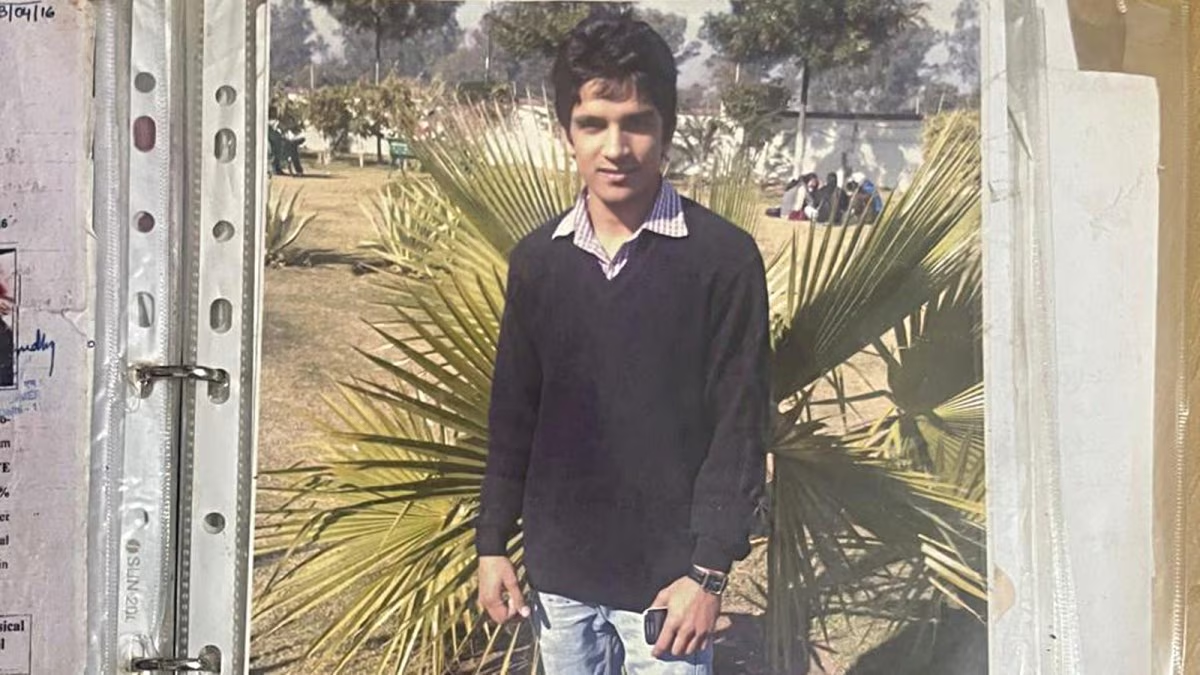
New Delhi: The decision to allow passive euthanasia in the case of Harish Rana has once again brought the sensitive debate around end-of-life care, dignity, and personal autonomy into the public sphere. While the legal and ethical dimensions of euthanasia often draw intense attention, another equally important issue deserves careful consideration—the privacy and dignity of the patient’s family. In moments of profound grief and difficult decision-making, families must be allowed the space to process their emotions away from the glare of public scrutiny.
The case of Harish Rana illustrates the complex and deeply personal nature of decisions related to passive euthanasia. Such decisions are never taken lightly. They involve medical evaluations, legal permissions, emotional struggles, and the collective consent of family members who must grapple with the reality of prolonged suffering and the absence of recovery. When a court or medical authority permits passive euthanasia, it is not merely a legal ruling; it is the culmination of a long and painful journey for the family.

In India, passive euthanasia was legally recognized by the Supreme Court of India in a landmark judgment in 2018. The ruling allowed withdrawal or withholding of life-sustaining treatment in certain circumstances under strict guidelines. The decision was rooted in the recognition that the right to life under Article 21 of the Constitution also includes the right to die with dignity. This framework sought to balance medical ethics, individual autonomy, and legal safeguards.
One of the earliest cases that shaped the euthanasia debate in India was that of Aruna Shanbaug. Her case in 2011 prompted a national conversation about end-of-life care and ultimately paved the way for clearer legal guidelines. However, while such cases often become symbols of legal and ethical debates, they also involve real families coping with unimaginable emotional burdens.
The case involving Harish Rana is no different. Behind the headlines lies a family that has likely endured years of uncertainty, medical challenges, and emotional strain. When a patient remains in a prolonged critical condition or irreversible medical state, the family becomes the primary caregiver and decision-maker. The responsibility of deciding whether to continue or withdraw life-sustaining treatment is among the most difficult choices anyone can face.
In such circumstances, respecting the family’s privacy is essential. Media attention, public speculation, and social media commentary can add unnecessary pressure and distress. Families should not have to justify their deeply personal decisions before the public or endure intrusive questions about their motives, beliefs, or emotions.
The concept of privacy has gained increasing importance in India’s legal and ethical framework. In 2017, the Supreme Court of India recognized privacy as a fundamental right in the landmark judgment involving K. S. Puttaswamy. The ruling affirmed that personal choices, including medical decisions, fall within the realm of individual autonomy and dignity.
When families face end-of-life decisions, this principle becomes even more relevant. Medical records, personal conversations with doctors, and family deliberations are deeply private matters. Publicizing such details without consent can violate the family’s dignity and create lasting psychological trauma.
The media plays an important role in informing society about legal developments and ethical debates. However, this responsibility must be balanced with compassion and sensitivity. Reporting on cases involving euthanasia should focus on the broader legal and ethical issues rather than sensationalizing the personal circumstances of the individuals involved.
Responsible journalism means avoiding speculation, protecting identities where necessary, and refraining from intrusive coverage that could harm the family. Ethical guidelines in journalism emphasize minimizing harm, especially when reporting on vulnerable individuals. Families dealing with end-of-life decisions are undoubtedly among the most vulnerable.
Another dimension of the issue is the impact of social media. In the digital age, news spreads rapidly, often accompanied by unverified information and emotional reactions. While public discussion can raise awareness about important issues, it can also lead to insensitive comments or misinformation that exacerbates the family’s distress.
Public discourse around euthanasia should focus on policy, ethics, and medical practices rather than targeting or judging specific families. Every case has unique circumstances, including medical conditions, cultural beliefs, and emotional dynamics that outsiders cannot fully understand.

Respecting privacy also aligns with the principles of medical ethics. Doctors and healthcare institutions are bound by confidentiality, which protects patients’ personal information. This confidentiality extends to the family members who are involved in decision-making processes. Hospitals and healthcare providers must ensure that medical details are not disclosed without proper authorization.
In addition to privacy, society must also acknowledge the emotional toll that such decisions take on families. Choosing passive euthanasia is rarely about ending life; it is about ending suffering when recovery is no longer possible. Families often spend years hoping for improvement before arriving at such a painful conclusion.
Psychologists note that families in such situations may experience complex emotions, including grief, guilt, relief, and uncertainty. Public scrutiny can intensify these emotions and complicate the grieving process. Providing them with empathy and support rather than judgment is therefore essential.
At a broader level, the case highlights the need for greater awareness about palliative care and end-of-life planning in India. Many families struggle with these decisions because they lack clear information about medical options, legal procedures, and emotional support systems. Strengthening palliative care services can help ensure that patients receive compassionate care while families receive guidance during difficult times.
Legal frameworks around passive euthanasia also emphasize safeguards such as medical boards, documented consent, and judicial oversight. These safeguards exist to ensure that decisions are made carefully and ethically. When such processes are followed, society must trust that the decision reflects the best possible judgment under difficult circumstances.
Another important aspect is the role of advance directives or living wills. The 2018 judgment of the Supreme Court of India also recognized the validity of living wills, allowing individuals to specify their preferences regarding medical treatment in case they become incapable of making decisions later. Greater awareness about living wills could help families avoid some of the dilemmas associated with end-of-life care.
Ultimately, the conversation surrounding passive euthanasia must be rooted in empathy, dignity, and respect. Families who make such decisions do so after deep reflection and often after exhausting all possible medical options. They deserve understanding rather than scrutiny.
The case of Harish Rana should serve as a reminder that behind every legal ruling is a human story filled with pain, hope, and difficult choices. While society may discuss the ethical and legal implications of euthanasia, it must also recognize the humanity of those directly affected.
Respecting the privacy of Harish Rana’s family is therefore not merely a matter of courtesy; it is a moral obligation. Allowing them the space to grieve, reflect, and move forward without intrusion is an essential part of respecting their dignity.
In a compassionate society, empathy must guide public discourse. Legal rights, ethical debates, and media reporting must all align with the fundamental principle that every individual and family deserves dignity—especially in their most vulnerable moments.
As India continues to refine its approach to end-of-life care and patient rights, the lessons from such cases should inspire greater sensitivity and respect for privacy. Only then can the balance between public interest and personal dignity truly be achieved.







 ---------------------------------------------------------------------------------------------------